




How effective is VR in healthcare – really?
A common question we get asked is whether our VR solution actually makes a difference in everyday clinical practice. That’s why we conduct ongoing user evaluations, asking all practitioners who use Mindergy’s VR tools whether they have helped during their treatment or procedures. The results are clear:
88.6% of practitioners feel that VR helps during treatment or procedures.
This is not an isolated study in a controlled laboratory environment – it is feedback from healthcare professionals in their daily work.
VR in healthcare – evaluated by dentists, nurses, doctors, and educators
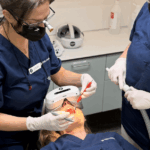
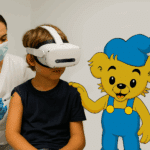
The results are based on responses from practitioners in dentistry, healthcare, pediatrics, oncology, and education. Respondents include dentists, nurses, doctors, and educators who use VR as a tool to reduce patient anxiety and fear, facilitate injections and treatments, create calm during longer procedures, and increase focus in educational settings. This reflects how VR is used in real clinical situations, not in experimental test environments.
What does 88.6% mean in practice?
When almost 9 out of 10 practitioners feel that VR helps during treatment, it indicates several things, such as increased security in the treatment situation when patients are perceived as more focused and less stressed. It also leads to smoother implementation of procedures, as many practitioners report that treatments can be carried out more calmly and efficiently. Staff stress levels are also perceived to be lower when patients are calmer, which also leads to a more stable working environment. Overall, this leads to a better patient experience, proving that VR works as a modern, non-pharmacological support for anxiety and fear.
VR as a tool for positive distraction in dental and medical care
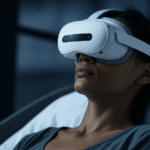
The concept of positive distraction is increasingly used in healthcare. It involves directing the patient’s attention toward something engaging and safe, which reduces their focus on discomfort or fear. Virtual reality has proven to be particularly effective because the experience is immersive, external stimuli are blocked, and the patient is mentally “transported” away from the treatment situation. The fact that this is now being confirmed by practitioners in everyday clinical practice reinforces VR’s role as a practical tool in modern healthcare.
Clinical reality – not a laboratory environment
It is important to emphasize that this result is based on ongoing user feedback from practitioners who use our VR solution in clinical and educational settings. It therefore reflects time constraints, everyday patient flows, different age groups, and real treatment situations. This is important because it is precisely in this environment that the tool must function.
The patient experience of the future is already here
When 88.6% of therapists feel that VR helps during treatment, it shows that the technology is no longer an “innovation for the future”; it is a functioning support in today’s healthcare. For clinics, this means a modern complement to traditional treatment, a non-pharmacological method for reducing anxiety, a tool that enhances both the patient and staff experience.
Would you like to know more about how VR can be implemented in your business? Contact us and we will tell you more.


